


In Campbell’s fast-moving real estate market, setting the right price is more than just a number—it’s the single most important factor in determining how quickly your home sells and how much you ultimately walk away with.
Overprice your home, and it can linger on the market, losing momentum and buyer interest. Underprice it, and you risk leaving tens of thousands of dollars on the table.
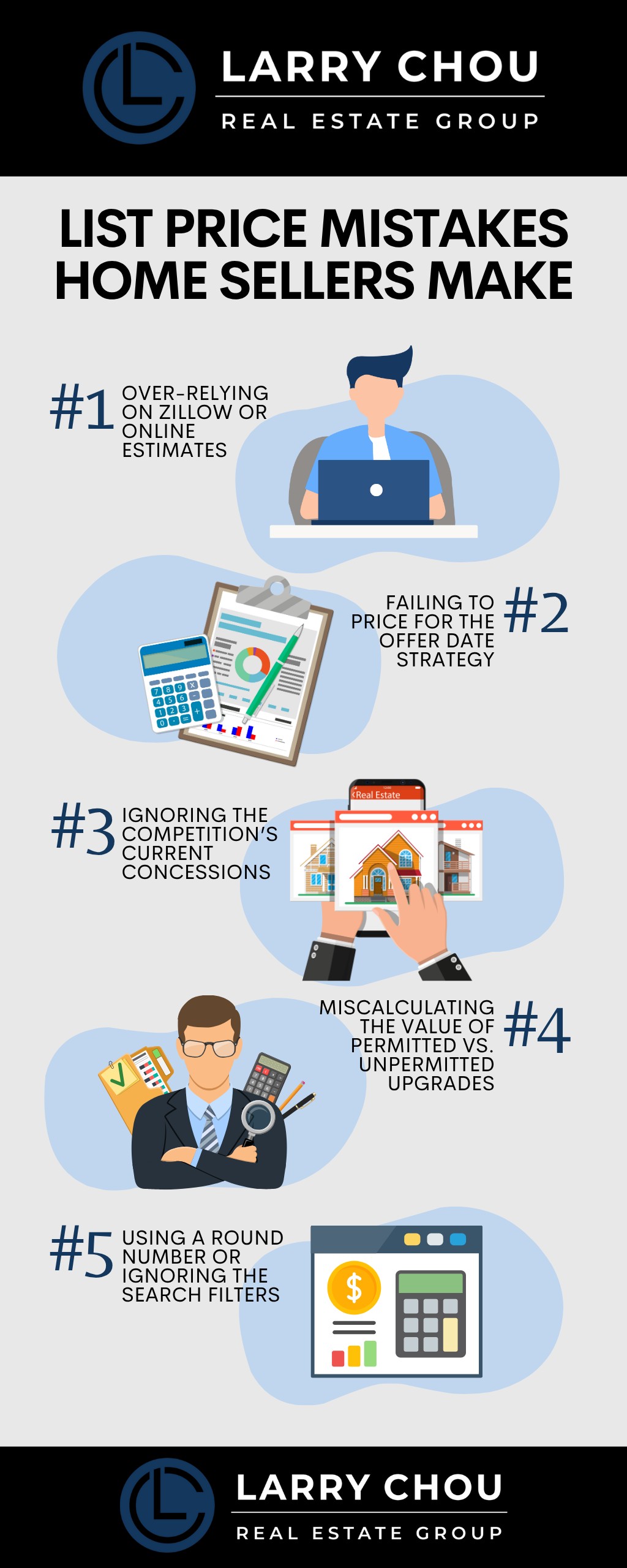
Every year, sellers make the same five critical Campbell home pricing mistakes, often without realizing it.
Understanding these pitfalls—and knowing how to avoid them—can mean the difference between a smooth, competitive sale and a frustrating, drawn-out process.

1. Over-Relying on Zillow or Online Estimates
Many Campbell homeowners start their pricing journey online, and there’s nothing wrong with checking tools like Zillow’s Zestimate. The problem is, automated valuations—called AVMs—are, at best, rough approximations.
The Problem with AVMs
Zillow and similar platforms use algorithms that rely on historical sales, square footage, and tax assessments. But Campbell’s market is nuanced.
A home on a quiet street near top-ranked schools may be worth significantly more than a nearly identical property on a busier thoroughfare.
Similarly, lot placement, upgrades, and even subtle architectural details can make a huge difference—details an AVM can’t capture.
The “Emotional Price” Trap
Sellers often inflate their expectations because they’ve invested time, money, and heart into their home. It’s natural, but setting a price based on sentimental value rather than market reality usually results in extended days on market (DOM).
The longer a property sits, the more buyers assume something is wrong, eventually forcing price reductions—and lost profit.
2. Failing to Price for the Offer Date Strategy
Campbell’s real estate market thrives on competition. Timing and strategy matter just as much as square footage.
The Silicon Valley Method
In a hyper-competitive market, it’s often smarter to list slightly under perceived value. This strategy encourages multiple offers and bidding wars, pushing the final sales price above the original list.
The Buyer Psychology
A home priced at $1,399,000 instead of $1,425,000 instantly attracts a larger pool of buyers. The perception of a “deal” drives urgency, prompting quicker decisions and higher offers.
The Cost of Waiting
The first two weeks on the market are the most critical. Homes that fail to attract strong early interest often require price cuts, which can signal desperation. Missing this window by overpricing can cost tens of thousands in potential offers.

3. Ignoring the Competition’s Current Concessions
Many sellers price strictly by reviewing closed sales, ignoring what’s happening in the active market today. That’s a mistake.
Ignoring Inventory Shifts
Campbell’s housing market is dynamic. Homes that recently reduced prices or offered concessions—like paying closing costs or buy-downs—shift buyer expectations.
If you set your list price based solely on closed comps, you could be out of step with current market realities.
The True Cost to the Buyer
Today’s buyers aren’t just looking at sale prices—they’re calculating total costs. Competitive buyers factor in interest rate buy-downs, HOA fees, and other concessions.
Pricing without considering these factors can make your listing less attractive, even if your home is objectively worth the number on paper.
4. Miscalculating the Value of Permitted vs. Unpermitted Upgrades
Campbell homeowners love customizing their spaces. But not all upgrades are created equal when it comes to pricing.
Permit Compliance Risk
Un-permitted additions or remodels often can’t command the same price per square foot as fully permitted spaces. Buyers and appraisers alike treat non-compliant improvements cautiously, which can limit your home’s market value.
Appraisal Impact
Listing aggressively based on unpermitted square footage can lead to appraisal gaps. Even if a buyer is willing to pay your price, lenders may not finance the full amount, potentially derailing the deal. Properly valuing permitted versus unpermitted spaces is critical to a smooth transaction.
5. Using a Round Number or Ignoring the Search Filters
Subtle nuances in online search behavior can have a surprisingly big impact.
The MLS Filter Breakpoint
Many buyers use MLS filters with maximum price caps. Listing at $1,400,000 instead of $1,399,000 could remove your property from dozens of active searches. A $500,000 cap on a condo search might miss a listing priced at $500,000 exactly, but $499,999 could capture it.
Precision Pricing
Strategic pricing down to the last dollar isn’t about being cheap—it’s about visibility. Hitting just below key thresholds can dramatically increase the number of buyers who see your home and, ultimately, who make offers.
Meet Your Market Pricing Specialist: Larry Chou
Larry Chou is more than a real estate agent—he’s a pricing strategist. He combines data-driven analytics with deep hyper-local knowledge of Campbell’s neighborhoods, schools, and buyer behavior.
By considering active market trends, buyer psychology, and competitive inventory, he ensures every home is listed at the price that will attract the most qualified buyers.
The Value Proposition
With Larry guiding your pricing, your home is positioned to create urgency, encourage multiple offers, and maximize final sale proceeds.
Avoiding the common Campbell home pricing errors above isn’t just theoretical—Larry ensures the list price is calibrated to capture market momentum from day one.
Frequently Asked Questions
How much does overpricing my home by 5% actually cost me in the long run?
Even a small overprice can extend DOM and reduce final offers, often costing sellers tens of thousands of dollars once reductions and lost buyer interest are factored in.
What is the ideal "Sale-to-List Price Ratio" for a successfully priced home in Campbell?
Top-performing homes often sell at or slightly above list, typically within 98–102% of the original asking price, depending on market conditions.
Should I choose a different pricing strategy if my home is a condo versus a single-family home?
Yes. Condos often attract a different buyer demographic and have HOA considerations. The same underpricing strategy may not always apply.
How far back should I look at comparable sales (comps) when setting my list price?
Ideally, focus on sales within the last 3–6 months. Older sales may not reflect current inventory levels, interest rates, or buyer behavior.
Does a high HOA fee impact the recommended list price for a townhouse or condo?
Absolutely. High monthly fees affect buyer perception of total cost, and sellers may need to price slightly lower to remain competitive.
If I have received multiple offers, should I raise the list price after the offers are reviewed?
Generally, no. Raising the list price after receiving offers can deter buyers. The goal is to generate competitive tension early on.
Key Takeaway
In Campbell’s complex, competitive market, your list price should be a strategic invitation to buyers, not an arbitrary demand.
Avoiding common mistakes—from over-reliance on AVMs to ignoring buyer psychology—can make the difference between leaving money on the table and securing top dollar.
Partnering with a seasoned market expert like Larry Chou ensures your home is priced to attract maximum attention, competitive offers, and the highest possible net proceeds. Contact him today at (408) 759-1201 or email him at Hey@LarryChou.com to schedule an appointment.